Coping When Everything Feels Like a Loss
Part 2 of a 4 part series on Grief, find more here.
Over the past year, my world didn’t just crack, it shattered. It wasn’t just a single event, but a relentless culmination of losses. My identity, my stability, my core relationships, and future dreams faded away. And despite my best efforts, I wasn’t prepared for the emotional wreckage I would be left with. I found myself dazed and confused by all of the feelings. I didn’t recognize it at first, because it didn’t look like “grief” as I knew it. There was no funeral, no single marker, just a quiet unraveling of self. What I thought was consequences of a wrong decision, was something far more complicated. It was compound grief; the silent, overwhelming weight of grieving everything, all at once, without a clear end in sight.
What is Compound Grief?
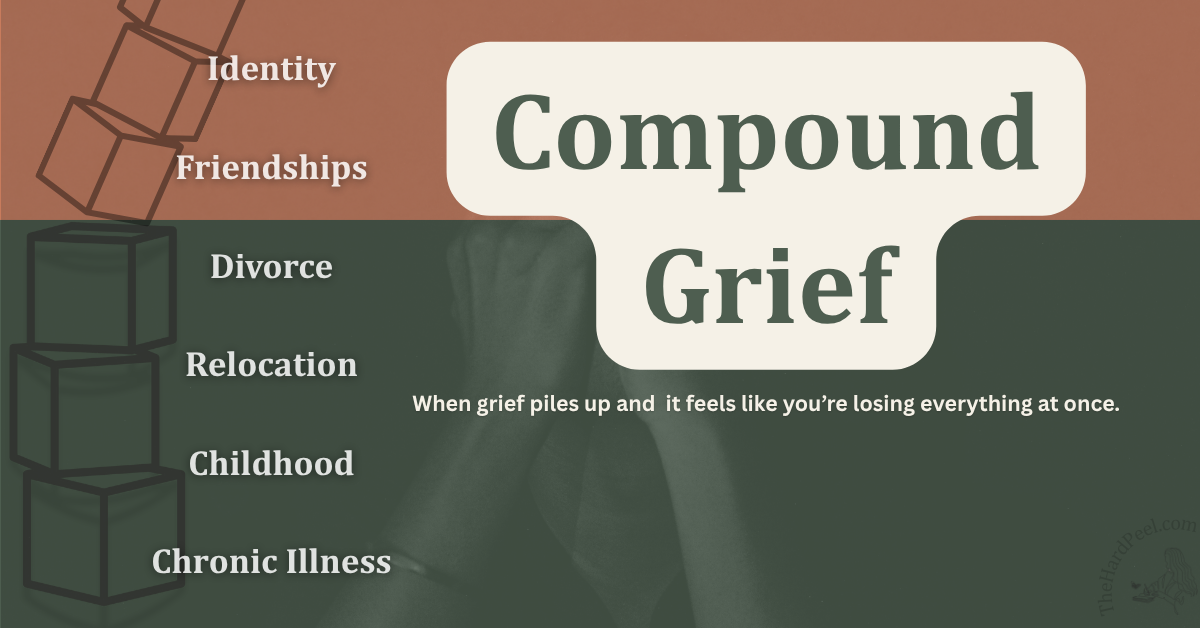
Compound grief, sometimes called cumulative grief, isn’t the single shot to the heart we typically understand. It’s an emotional avalanche, triggered by multiple losses piling up. Often these losses happen in rapid succession or before you’ve had a chance to process the one before. Think divorce, job loss, relocation, the quiet death of friendships, or even shifts in identity and purpose.
Unlike the focused sorrow after death, compound grief arrives subtly. It disguises itself as persistent burnout, irritability, and internal resistance. Or it shows up as physical symptoms like fatigue and insomnia. There’s no memorial, no sign, and no fruit basket declaring, “This is grief.”
Instead, your nervous system gets completely overwhelmed, a familiar feeling to those from trauma. You feel paralyzed, disconnected, or you’re on high alert, anticipating the next loss. Each unprocessed layer of loss compounds the next. This makes it harder to heal, to breathe, and to simply be yourself.
The ending of my marriage, loss of my home, long-held friendships, and the identity I built my strength around are the compounds of my grief. Add in the gnawing anticipatory grief for my father’s declining health and the intense unpacking of childhood trauma, it’s no surprise my soul feels heavy. None of these losses arrived with an obituary, but each one buried me deeper in the suffocating mix of shame, abandonment, sadness, and anger.
How Compound Grief Shows Up
This unnamed grief first manifested as intense burnout, not the kind a long weekend can cure. But a deep exhaustion seated in the soul, filling you with dread as you wake up. My job, once a passion, felt like a prison. I wasn’t lazy or ungrateful; my spirit was screaming for space to feel, and the whole world refused to pause.
Then came an almost physical resistance to movement. My body rebelled against walks, stretches, anything that might stir the buried sorrow. It felt like a deep, internal injury, demanding stillness as a way to protect my wounds. “We’re wounded. Don’t move,” my soul commanded.
Withdrawal followed. Hiding felt like a shield against future rejection, a way to deny the current wounds. Subconsciously, I feared that acknowledging these losses would turn me into a full-time victim. It’s tricky, embracing a victim mindset. It can offer temporary safety, a way to gain validation and be seen in suffering. Yet, it’s a deceptive comfort that can quickly become an addiction.
Compound grief rarely presents with obvious tears. Instead, it weaponizes avoidance and self-sabotage, as seen in the ways we disconnect from ourselves and others. It is, quite simply, grief without a name tag. But finding that name is the critical first step toward reclaiming your power.

Why This Type of Grief is So Hard to Name
Grief is often misunderstood, especially when it doesn’t follow a death. Society tends to recognize grief only when it’s tied to funerals, obituaries, and memorials. But what about the losses of relationships, identity, stability, or even hope? These significant shifts can elicit a deep grief, yet without a tangible “event,” we struggle to validate it.
A WebMD survey highlights this disconnect, 88% of people who experienced grief due to a life event reported emotional symptoms. With sadness and depression being the most common. It further revealed those who lost friendships/relationships experienced depression, anger, and withdrawal at higher rates than those grieving the death of a loved one. Astonishingly, many don’t connect these symptoms to grief until they begin to disrupt daily life, or in my case, sense of self.
My first clue wasn’t sorrow; it was the return of self-criticism. Suddenly, the voice in the mirror sneered, “You’re disgusting.” Mistakes began triggering an overwhelming shame. Destructive patterns I’d spent years in therapy dismantling resurfaced. This wasn’t burnout or simple lack of motivation; it was grief, deeply hidden, even from myself.
Unnamed grief becomes a silent master. It manifests as corrosive self-doubt, persistent shame, and a slow, agonizing disconnection from our bodies and worth. Because it defies the tidy boxes of “traditional” grief, we deny ourselves permission to feel it. And even if we acknowledge it, we rarely make the necessary space or time. After all, life demands we keep moving and producing, right?

What’s Helping Me Cope
Naming the grief has changed things. The moment I understood my depression and crushing exhaustion were not personal failures, but symptoms of compound grief, the self-blame began to dissolve. My focus shifted from “fixing what’s wrong with me” to compassionately tending to myself.
I’ve doubled down on my established coping mechanisms: consistent therapy, regular support groups, and dedicated journaling. This blog has also become a vital processing space where I feel seen and understood. The value of these five years of recovery work is now becoming clear; these tools are my anchors. The sheer relief of simply understanding why I feel this way has lifted an immense weight.
It’s perplexing the way our brains shield us from the source of our suffering. It leads us to frantically search for solutions in our current environment when the pain originates from months, or even years, prior. I’ve realized, once again, that I am not broken. I am simply grieving—for the life I lost, the relationships that ended, the home that vanished, and the identity that evaporated.
With this grief comes the inevitable question, “What will my life be now?” But coping isn’t about having all the answers. It’s about choosing to stay present with the questions, granting permission to feel, to rest, and to rebuild at my own pace. And for today, that is enough.

You’re Not Alone
If you’re feeling low and can’t quite explain why, if your depression doesn’t seem to match your current circumstances, you’re not alone.
What we label “depression” is often unnamed grief; pain pushed aside because life, and society, demanded we keep going. There’s no prescribed adjustment period, no ritual, no societal recognition for the deep, cumulative losses.
We’re expected to show up, be present, keep moving. And we do, until our bodies, minds, and spirits declare, “Enough.” But here’s the truth you need to internalize:
Your grief is valid.
Your healing requires no external permission.
You never have to justify your pain to deserve boundless compassion.
I’m still navigating this terrain, still healing, still learning to honor what’s been lost. All while gently making space for what comes next. If you’re grieving quietly, carrying this heavy, unnamed weight, I see you. You are not alone.