Financial healing means reclaiming your autonomy and trust, and building confidence with money and spending. When you understand where your spending behaviors come from—whether it be childhood, adult relationships, or capitalist consumerism—you unlock the freedom to change them.
Because shame played such a large role in my relationship with money, I’m learning to reframe my opinions on spending and earning. I’m learning it’s okay to spend money on items that enrich my life, and to stop spending from a scarcity mindset. No one needs 32 bath towels, Ash. 😅
But trauma-informed financial literacy isn’t just about numbers and spending habits—it’s about nervous systems. It’s about building safety and trust with money in emotionally paced, shame-free environments.
Budgeting and saving can seem like punishment, especially if you’ve only ever done it in survival mode. But it can actually be a form of self-care and empowerment. It helps us reclaim our autonomy, exhibit control in ways that feel nourishing, and reduce stress.
How I’m Actively Healing My Relationship With Money—
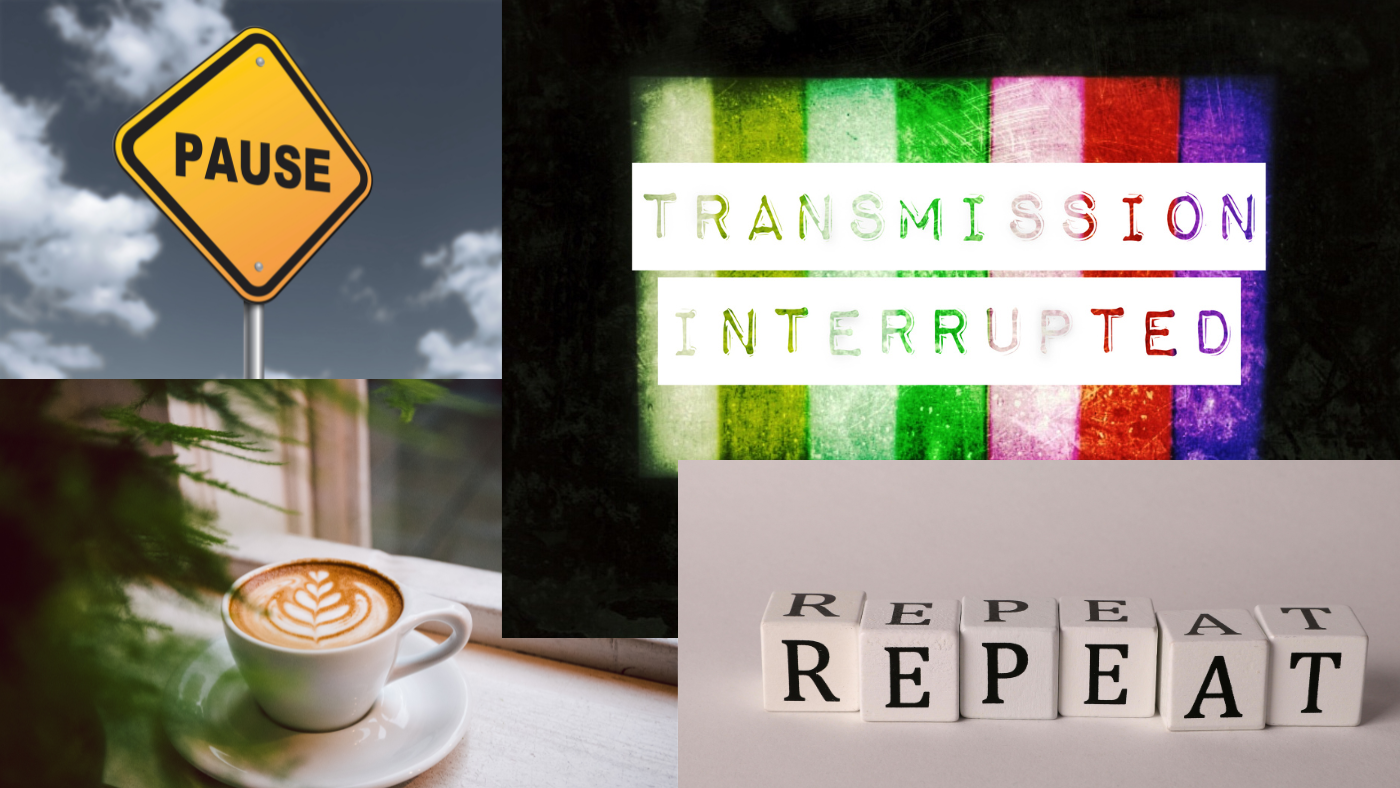
Pausing Before Purchasing
I ask myself: Is this a need, investment, or treat? Am I trying to soothe an uncomfortable emotion with retail therapy? Am I in it for the long-term benefit or the dopamine hit?
Interrupting Incessant Worrying
The spiral sounds like: “What if we run out of money? What if we lose our job and can’t afford to live? What if I don’t have enough?”
I interrupt it with: “What if we don’t? What if we don’t lose our job? What if we do have enough? Are we open to that?”
This isn’t toxic positivity, it’s nervous system regulation. It’s practicing emotional neutrality in the face of financial fear.
Buying Myself the Damn Coffee
If $5.62 a day breaks me, so be it. I deserve to enjoy the smallest comforts without guilt. I will soak up every vanilla sweet cream cold brew I can until I can’t anymore. Because joy is not irresponsible. Pleasure is not betrayal. And comfort is not a luxury to me—it’s a requirement.
Repetition
Healing takes practice. I still catch myself hoarding, over-tipping, or panicking over small purchases. But now I pause. I reflect. I reframe and I redirect.
I’m done surviving scarcity. I’m learning to create abundance; with integrity, with authenticity, and with a nervous system that feels safe enough to receive it.
Budgeting is Self-Care
Ultimately, financial healing is an act of courageous self-care—it’s a commitment to moving from a state of scarcity and shame to one of safety and abundance. The real work isn’t just balancing a ledger; it’s regulating your nervous system so that you can approach your money with clarity, trust, and autonomy.
Ready to take these principles and apply them in a way that feels supportive, not stressful? My next post, Practical Financial Tips for Trauma Survivors: Budgeting as Self-Care, includes free, downloadable PDF worksheets designed to help you organize your finances from a place of emotional safety. Click here to download your templates and begin building a budget that truly empowers you.
As trauma survivors, typical financial tips and budgeting may not work for us. That’s because developing a new relationship with money after trauma requires more than budgeting apps and financial advice; it requires emotional safety, nervous system regulation, and tools that honor your lived experience.
At least, that’s what’s true for me, and I can’t help but think it’s also true for others. That’s why I’ve put together some practical budgeting tips and created free trauma-informed guides for approaching money.
Trauma-informed practices to help you build financial resilience
Practice Emotional Pacing
Before making financial decisions, pause. Check in with your body. Ask: Am I regulated right now? Is this decision coming from fear, urgency, or self-trust? Creating space between impulse and action is one of the most powerful tools for financial healing.
Instead of rigid budgets, try building a flexible safety map: Identify your non-negotiables (housing, food, emotional care, coffee 😉). Set up a small emergency fund—even $50 can create a sense of control. List backup plans and support contacts for financial stress moments. This isn’t about perfection, it’s about preparation that feels emotionally safe.
Seek Trauma-Informed Support
You deserve help that sees your whole self—not just your spending habits. Look for financial therapists or coaches trained in trauma-informed care. You can find excellent resources at the Financial Therapy Association or through specialized guides like our 🆓 Trauma-Informed Financial Literacy PDF ✨.
Reframe Budgeting as Self-Care
Budgeting doesn’t have to be punishment. It can be a ritual of self-respect. Try naming your budget categories with emotional language: “Nourishment” instead of “Groceries,” “Comfort” instead of “Miscellaneous,” or “Creative Expansion” instead of “Education.” Let your numbers reflect your values—not just your expenses.
Healing our relationship with money isn’t just about balances, it’s about nervous systems, memories, and meaning. It’s about reclaiming our right to feel safe, supported, and secure in every financial decision we make.
We don’t have to hustle our way into worthiness. We don’t have to budget our way out of shame. We get to build a financial life that honors our emotional truth.
And if you’re ready to go deeper, download the free resource below.
It includes affirmations, journaling prompts, boundary scripts, and support maps to help you build emotional safety around money—one gentle step at a time.
After childhood, many trauma survivors find themselves in adult relationships that mimic the financial exploitation, abuse, or shame from their childhoods. It’s not a coincidence, it’s a pattern. And it’s more common than most people realize.
According to the National Network to End Domestic Violence, financial abuse occurs in 99% of domestic violence cases [1]. It’s one of the most powerful tools abusers use to maintain control, and one of the top reasons survivors stay or return to abusive partners.
Restricting access to money or accounts, even your own
Sabotaging employment or educational opportunities
Creating debt in your name
Using money as leverage, manipulation, or punishment
“I’ll let you buy that if you let me do this.”
The Devastating Consequences
Sharing finances is scary for me. I’ve never shared a bank account with another person for this reason. If I can be exploited and used while keeping a separate account, why would I trust someone to have full 24/7 access? Those are the thoughts that go through my head when a partner suggests a joint checking account.
The consequences of financial abuse can include:
Loss of financial autonomy
Erosion of self-worth and confidence
Feeling trapped or unable to leave due to economic dependence
But it’s not just people. Institutions, banks, and companies have also been known to prey on the financially vulnerable—especially those with limited financial literacy or trauma histories.
Take student loans, for example. The Consumer Financial Protection Bureau has uncovered illegal practices across student loan servicing, including:
Misleading borrowers about protections
Denying rightful benefits
Deceptive billing and unauthorized debits
Exploitative refinancing that strips federal protections [2]
And the Student Borrower Protection Center reports that for-profit colleges have disproportionately targeted low-income communities and students of color with predatory financial schemes; promising opportunity but delivering debt and disillusionment [3].
It’s personal, and it’s systemic. Financial abuse lives in relationships, yes. But it also lives in policy, in profit models, and in the fine print.
Why The Beliefs We Hold About Spending Matter
Financial abuse can also be self-induced. It comes from the way we talk to ourselves and our own beliefs. Many of us were raised in environments where money was tied to survival, shame, and sacrifice. Where spending, even on happiness, was seen as betrayal.
When we were younger, my brother bought a scooter with cash he earned helping our uncle. My mother threatened to leave because he didn’t contribute to the household. Because, “no one thinks of anyone except themselves”.
That moment stuck with me. It taught me that spending money on yourself, even when you’ve earned it, is dangerous. Selfish. Risky.
This is scarcity mindset in real time. It’s the belief that there’s never enough, and that any personal abundance must be punished or redistributed. It teaches us:
To feel guilty for spending on ourselves
To equate worth with sacrifice
To fear joy, pleasure, or autonomy when money is involved
Scarcity mindset is cultural, generational, and systemic. It’s reinforced by trauma, poverty, and survival conditioning. And it shows up in our adult lives as:
Shame around buying things we love
Fear of financial independence
Over-giving or under-earning in relationships
Feeling undeserving of rest, pleasure, or abundance
“I am allowed to enjoy my time. I am allowed to do things I love. I am allowed to buy items necessary to explore a new passion. I don’t have to “perform” in a certain way to deserve this time and opportunity. I am allowed to invest in myself, my mental health, and my life.”
Moving Forward After Financial Trauma
Before we can reclaim financial safety, we have to name the stories we inherited. The ones that taught us fear, guilt, and silence around money. Healing begins with truth.
When I was eleven, I calculated my family’s finances, analyzed where cuts could be made, and presented my parents with a budget. They were unimpressed with my findings—that we could be a little more financially secure without alcohol or cigarettes. With a history in finance such as that, one would think I make financially sound decisions in adulthood. And one would be wrong.
Something that didn’t occur to me at eleven years old—
Knowing how to prepare a budget and knowing how to carry one out are two, massively, different things.
When you’re stuck in survival mode and come from a scarcity mindset, financial literacy and budgeting probably aren’t at the forefront of your mind. Or maybe they are. As with anything, the extremes can go both ways. You may struggle to manage your money, or you may exert rigid control—never allowing yourself to indulge and avoiding necessary purchases.
How do we handle finances after trauma? And are the decisions we make with our money aligned with our present reality?
Financial trauma is a term used to describe the psychological and emotional distress that results from negative, often repeated, financial experiences. These experiences can include financial abuse, poverty, debt, or a chaotic money environment in childhood.
The effects of financial trauma often extend beyond a person’s bank account, impacting their self-worth, relationships, and ability to make rational financial decisions.
Can you recover from financial abuse?
Yes, recovery is absolutely possible. The journey involves both practical steps like gaining financial independence and emotional healing to rebuild your sense of self-worth and trust. Seeking support from a trauma-informed financial coach or therapist can provide a safe space to process these experiences and create a personalized plan for recovery.
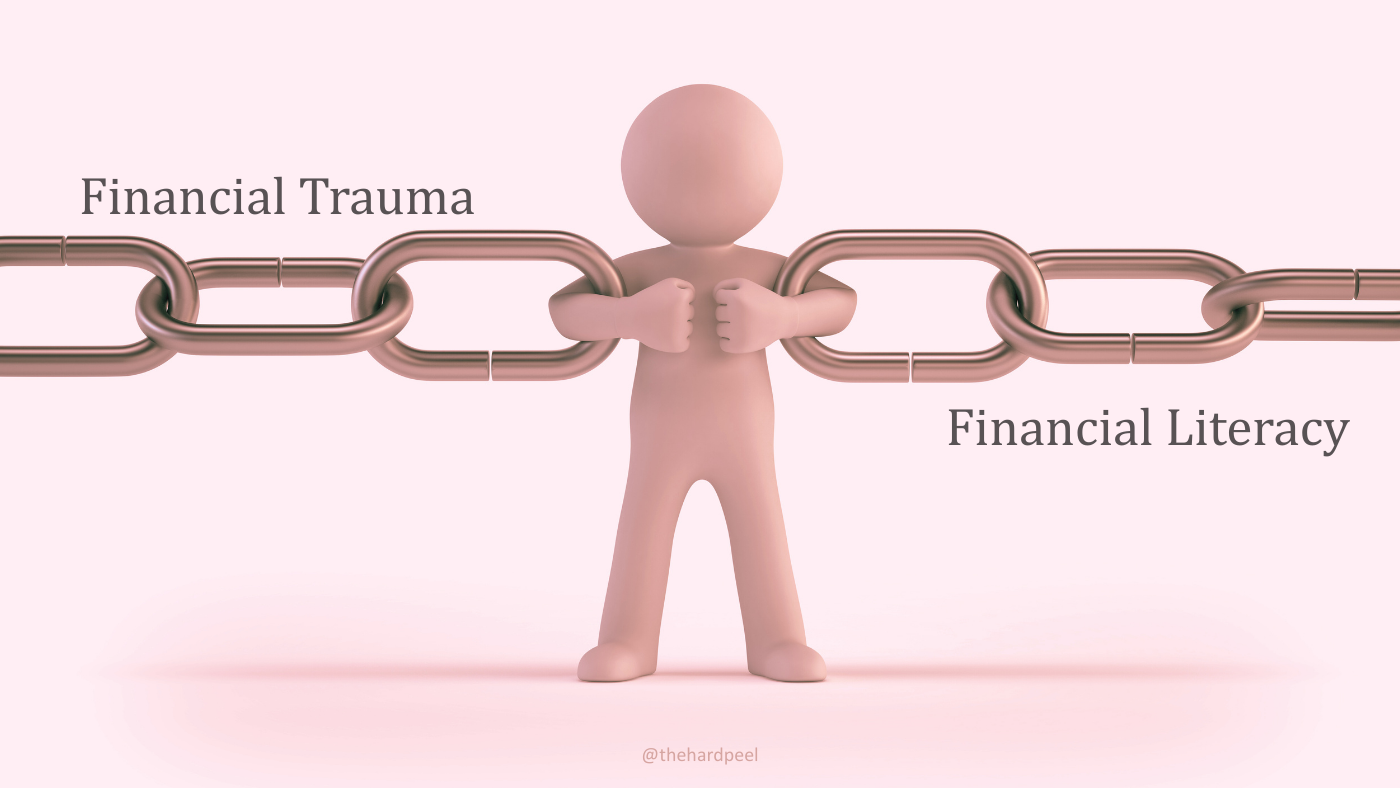
The Link Between Financial Trauma and Financial Literacy
My early budgeting skills weren’t born from empowerment, they were born from necessity. And like many of us who grew up in survival mode, my financial literacy was shaped more by chaos than clarity.
Before we ever learn to budget, save, or invest, we absorb financial behaviors from the people around us. Think about how your parents or caretakers managed money. Was it a major stressor? Were you expected to contribute to the household as a child? Did you grow up in poverty, with debt collectors knocking and bills going unpaid?
These experiences don’t just shape how we feel, they shape how we spend. Adverse Childhood Experiences (ACEs)—like neglect, abuse, and household dysfunction—don’t just affect emotional development. They shape how we approach money, risk, and long-term planning.
ACEs Leave Us At Higher Risk
Studies show that individuals with high ACE scores are significantly more likely to experience financial instability, regardless of income level [1][2]. For many, the challenges of financial trauma begin in childhood with patterns like:
Financial abuse: You earn money, but it’s never really yours. Your autonomy is erased before it even begins.
Scarcity: You learn to stretch everything—food, clothes, medications. Budgeting becomes a game of survival, not strategy.
Domestic violence: Money becomes a weapon. Arguments erupt over spending and you learn to fear financial conversations.
Shame: You internalize the idea that poverty equals failure. Even as an adult, you feel guilty for needing help.
Guilt-Driven Spending
Guilt-driven spending is one of the most confusing loops to untangle. It often looks generous on the outside—over-gifting, over-tipping, over-buying for others—but underneath, it’s a nervous system trying to earn safety.
We spend to soothe, to apologize, to prove we’re good, worthy, or not a burden. Sometimes we spend because we feel guilty for having anything at all. For me, guilt shows up as tipping 50-100% to be a “good customer,” feeling bad for saying no, or trying to “make up” for emotional absence with material presence.
When guilt is driving, long-term planning feels impossible. The future becomes a blurry threat instead of a grounded possibility. We avoid budgeting because it feels like punishment. We resist saving because we don’t believe we’ll be around to enjoy it. We sabotage stability because chaos feels more familiar than calm.
A Gentle Reminder
Avoidance isn’t laziness, it’s protection. And guilt isn’t morality, it’s an echo of the trauma we experienced.
When we begin to understand our financial behaviors as emotional survival strategies, we stop shaming ourselves and start reclaiming choice. We start asking:
What am I trying to feel by spending this?
What am I afraid will happen if I plan ahead?
What does safety with money actually look like for me?
This is where healing begins, not with perfect budgets and spreadsheets, but with honest reflection. Before we learn new financial skills, we have to unlearn the ones trauma taught us. If you’re ready to dive deeper, check out my article, Financial Abuse: Rebuilding Your Finances After Abusive Relationships .
Living with CPTSD means my nervous system doesn’t always recognize safety, even when I do. It shapes how I move, connect, create, and rest. Every day is a negotiation between survival instincts and self-trust.
It can feel like a rollercoaster, swinging from excitement for the plans I have, to being filled with suicidal thoughts. It isn’t always that extreme, but it has been and probably will be again.
It feels like my body has been hijacked: these aren’t my feelings, these aren’t my reactions, these aren’t my thoughts. I pride myself on my kindness and gentle nature. So, when I ‘wake up’ from an emotional flashback, it’s disorienting. Depending on what I did or said, it can be deeply shame-inducing.
Complex Post-Traumatic Stress Disorder (CPTSD) is a mental health condition that can develop after prolonged, repeated trauma; especially trauma that occurs in relational or inescapable contexts. Unlike PTSD, which is often linked to a single traumatic event, CPTSD arises from chronic exposure to harm, such as childhood abuse, domestic violence, or captivity [1].
Core Symptoms and How They Show Up
According to Cleveland Clinic, CPTSD includes core symptoms of PTSD—flashbacks, avoidance, and hypervigilance. But adds three additional symptoms:
Affective Dysregulation: intense emotional reactivity or numbness
Negative Self-Concept: persistent shame, guilt, or feelings of worthlessness
Interpersonal Difficulties: chronic mistrust, isolation, or fear of relationships
The World Health Organization officially recognized Complex PTSD in the ICD-11, distinguishing it from PTSD and Borderline Personality Disorder (BPD) [1][2]. However, the American Psychiatric Association’s DSM-5 still does not list CPTSD as a separate diagnosis, contributing to confusion and inconsistent care [1][3].
Why Complex PTSD is Often Undiagnosed or Misdiagnosed
The Challenge of Finding Trauma Informed Care
Despite its prevalence, Complex PTSD is frequently overlooked or misdiagnosed, especially in marginalized communities. For example, research indicates that minority groups, particularly Black individuals, face higher rates of misdiagnosis for mental health conditions due to racial bias and a lack of culturally competent care [8][9]. Several factors contribute to this:
Gaps in Trauma-Informed Care
Many clinicians lack training in complex trauma, especially in primary care settings [4].
Survivors may not have access to specialists who recognize relational trauma patterns.
Low Public Awareness
CPTSD is still emerging in mainstream mental health discourse.
Survivors often internalize their symptoms as personal failings rather than trauma responses.
Stigma and Misdiagnosis
Complex PTSD is commonly misdiagnosed as Borderline Personality Disorder (BPD), especially in women and survivors of childhood abuse [4][5][2].
Research shows that while BPD and CPTSD share overlapping symptoms (e.g. emotional dysregulation, relationship struggles), they differ in origin and presentation. CPTSD stems from chronic trauma and includes a distorted self-concept rooted in shame, whereas BPD is characterized by unstable identity and fear of abandonment [5][2].
Complex PTSD doesn’t arise from a single traumatic event—it’s the result of prolonged exposure to harm, especially in relationships or systems where escape feels impossible. While chronic childhood abuse and neglect are among the most common causes [1], CPTSD can also develop in adulthood through repeated emotional, physical, or psychological violations.
Relational Trauma in Adulthood
Abusive relationships, spiritual exploitation, and medical gaslighting are all valid contributors to CPTSD. Long-term exposure to controlling or manipulative dynamics, especially those involving cheating, domestic violence, financial abuse, or sexual coercion, can destabilize the nervous system.
Survivors often find themselves walking on eggshells, bracing for the next incident. Over time, this hypervigilance and emotional dysregulation become embedded patterns, even after the relationship ends.
For many, Complex PTSD symptoms existed before the relationship—but the abuse intensified them. The longer the exposure, the deeper the imprint.
Medical Trauma and Gaslighting
Medical gaslighting—where a patient’s symptoms are dismissed, minimized, or misattributed—can be deeply traumatic, especially for those with chronic illnesses.
Studies show that women, minorities, and disabled individuals are disproportionately affected by diagnostic dismissal and invalidation [1]. When your pain is ignored by the very systems meant to help, it reinforces the belief that your suffering is invisible or unworthy of care.
“I’ve experienced the gaps. I’ve sat in exam rooms while my pain was minimized, my symptoms brushed aside. It wasn’t just frustrating—it was retraumatizing.”
Ash Elizabeth, The Hard Peel
Systemic Oppression and Institutional Betrayal
CPTSD can also stem from systemic abuse—when institutions fail to protect, support, or acknowledge harm. This includes:
• Racial and gender-based discrimination
• Legal and financial exploitation
• Medical neglect
• Educational or workplace retaliation
• Governmental abandonment
Institutional betrayal occurs when trusted systems—like healthcare, education, or law enforcement—fail to respond appropriately to trauma, or actively contribute to it [6][7].
Research shows that survivors of interpersonal trauma who also experience institutional betrayal report more severe CPTSD symptoms, higher emotional dysregulation, and lower treatment completion rates [6].
Being a female, from a traumatic childhood, with chronic illness, I’ve lived the betrayal. I’ve been gaslit by doctors, dismissed by systems, and left on edge by relationships that promised safety but delivered harm.
The Cumulative Nature of CPTSD
It’s Not Just One Thing
CPTSD is more than just one traumatic event. It’s the accumulation of being unseen, unsafe, and silenced over time. It’s the slow erosion of trust; in others, in systems, and sometimes in yourself.
For me, it was years of surviving in spaces that didn’t know how to hold me.
My Journey with CPTSD: A Look at the Symptoms
Symptoms of CPTSD can vary in frequency, severity, and trigger for each person. It’s important to remember they are not personal failings. They’re survival adaptations. Many of these responses once protected us in unsafe environments. Some can even be gently reframed into tools for healing in the present.
Here are a few of the most common symptoms, along with how they show up in my life:
Emotional Flashbacks and the Younger Self
Sudden, intense emotional states, often without a clear trigger, that transport you to a past version of yourself.
I experience emotional flashbacks frequently. They’re not always dramatic, they can sneak in quietly. A tone, a look, a physical discomfort and suddenly, I’m not in the present anymore. I’m in the mind of a younger version of myself. A version that feels neglected, attacked, and alone.
As a kid, my pain was dismissed, by my parents and doctors. So now, even a small ache or hormonal dip can send me spiraling. I get depressed, at times to the point of suicidal ideation. I feel unseen, disrespected, angry, and I isolate.
I don’t fight it anymore. I treat it as a signal for rest and compassion. I gather my comfort items, curl up on my couch or in bed, and let myself be cared for, by me. I journal, read or watch something familiar. It’s my way of saying: I see you. I believe you. You’re not being neglected anymore.
Hypervigilance: Protection, Not Paranoia
Constant scanning for danger, difficulty relaxing, and exaggerated startle responses.
Because of the abuse I experienced and witnessed in childhood, and the cheating and financial abuse I experienced in adult relationships, I’m nearly always scanning. Always calculating. Did his timeline add up? Was he on his phone more than usual?
I’ve literally gotten in my car and retraced a partner’s steps to see if the timing made sense. That’s not just anxiety or trust issues, that’s CPTSD. It’s also in my body. I flinch when someone moves too fast. I brace myself when I make a mistake, like spilling coffee, because I’m expecting punishment.
It’s exhausting. But I understand it now. It’s not paranoia, it’s protection.
Dissociation: Running in a Dream
Feeling disconnected from your body, emotions, or surroundings; a sense of floating or unreality.
Some days, I feel like I’m floating above myself. Watching my body go through the motions while I’m somewhere else entirely. I used to think it was just depression, but it’s more than that. It’s like trying to run in a dream — where you feel stuck, held back, unable to reach what you’re chasing.
When I’m in that space, joy disappears. My loved ones feel distant. I stop seeing them as people I’m connected to and start seeing them as obstacles or pawns. It’s painful to admit. But naming it helps.
When I notice that shift, I try to stay honest — with myself and with them. I let them know what’s happening. That openness helps me move through it with less shame and more compassion.
The Filter of Shame
Persistent feelings of guilt, worthlessness, or self-blame.
Shame follows me everywhere. It’s not just a feeling, it’s a filter. It dictates what I can do, it tells me who I am, it shows up in my work and in my relationships.
It’s loud when I write. It whispers when I show up to my support groups. It tells me I’m too much or not enough. That I should be further along. That I’m failing. Sometimes I can’t even name where it’s coming from — it just shows up.
I’ve learned to recognize it a little better, and to talk back to it. I remind myself that shame is not the truth, it’s a wound. And wounds can be tended to.
CPTSD and Relationship Challenges
Difficulty trusting, fear of abandonment, and people-pleasing.
CPTSD doesn’t just affect how I feel, it affects how I relate. In my relationships, it shows up as trust issues, fear of abandonment, people-pleasing, and avoidance. If my partner says they’re working late, my mind doesn’t care about facts, it automatically assumes they’re lying.
I’ve looked up the addresses they’re working at to see who lives there. I’ve bent over backwards to keep the peace, even when it cost me my own boundaries. I’ve pulled away when things felt too good, because it felt suspicious.
These patterns aren’t about drama. They’re about survival. And when I can’t redirect or reframe, they lead me to act in ways that go against my own values. But I’m learning to pause. To name it and to focus on the facts and my present reality.
A New Definition of Healing: Reclaiming What Was Taken
Healing isn’t a finish line to chase. It’s a daily decision; it has to be. Because no one works harder than mental illness. CPTSD shows up every day and we have to as well.
Healing means forgiving yourself for the ways you’ve reacted from past wounds. It means choosing presence over protection, even when it’s hard. It’s about regulating your nervous system and creating safety from the inside out.
Tools for Daily Regulation and Self-Care
There are tools that help. Not to fix us, but to support us in reclaiming our peace:
Journaling offers a safe space for your best and worst parts to speak.
Creative expression builds confidence and authenticity, reconnecting you to your identity.
Gentle movement creates safety in the body, helping you feel grounded and whole.
Self-compassion rituals remind you that you’re worthy of care—even when you’re struggling.
Check out our Wellness Tips for prompts, meditations, and ideas for creative expression.
A Final Message of Hope
For me, healing looks like journaling, therapy, and support groups. But it also looks like days in bed or on the couch. It looks like listening to my needs and granting myself permission to care for myself; without guilt. I used to think I had to push through, hustle harder. But I realized hustling and guilt kept me stuck in the same cycle.
Motivation to continue healing doesn’t exist for me. It’s a commitment, a determination to not let my past define my present. So much was taken from me, I’ll be damned if I’m going to give up any more. Healing has become less about fixing and more about honoring and reclaiming what was stolen—my authentic self. The trusting, kind, loving, joyous self whose spark was extinguished.
Healing asks us to be open. To stay curious. To believe that we’re not failures. We’re not broken. We’re worthy—of love, of rest, of joy, of peace.
How can you care for yourself today? What do you need to feel safe and secure? Do it. Go after it. Ask for it.