
Part one of a four-part series. Explore more below.
When I was eleven, I calculated my family’s finances, analyzed where cuts could be made, and presented my parents with a budget. They were unimpressed with my findings—that we could be a little more financially secure without alcohol or cigarettes. With a history in finance such as that, one would think I make financially sound decisions in adulthood. And one would be wrong.
Something that didn’t occur to me at eleven years old—
Knowing how to prepare a budget and knowing how to carry one out are two, massively, different things.
When you’re stuck in survival mode and come from a scarcity mindset, financial literacy and budgeting probably aren’t at the forefront of your mind. Or maybe they are. As with anything, the extremes can go both ways. You may struggle to manage your money, or you may exert rigid control—never allowing yourself to indulge and avoiding necessary purchases.
How do we handle finances after trauma? And are the decisions we make with our money aligned with our present reality?
What is Financial Trauma?
Financial trauma is a term used to describe the psychological and emotional distress that results from negative, often repeated, financial experiences. These experiences can include financial abuse, poverty, debt, or a chaotic money environment in childhood.
The effects of financial trauma often extend beyond a person’s bank account, impacting their self-worth, relationships, and ability to make rational financial decisions.
Can you recover from financial abuse?
Yes, recovery is absolutely possible. The journey involves both practical steps like gaining financial independence and emotional healing to rebuild your sense of self-worth and trust. Seeking support from a trauma-informed financial coach or therapist can provide a safe space to process these experiences and create a personalized plan for recovery.

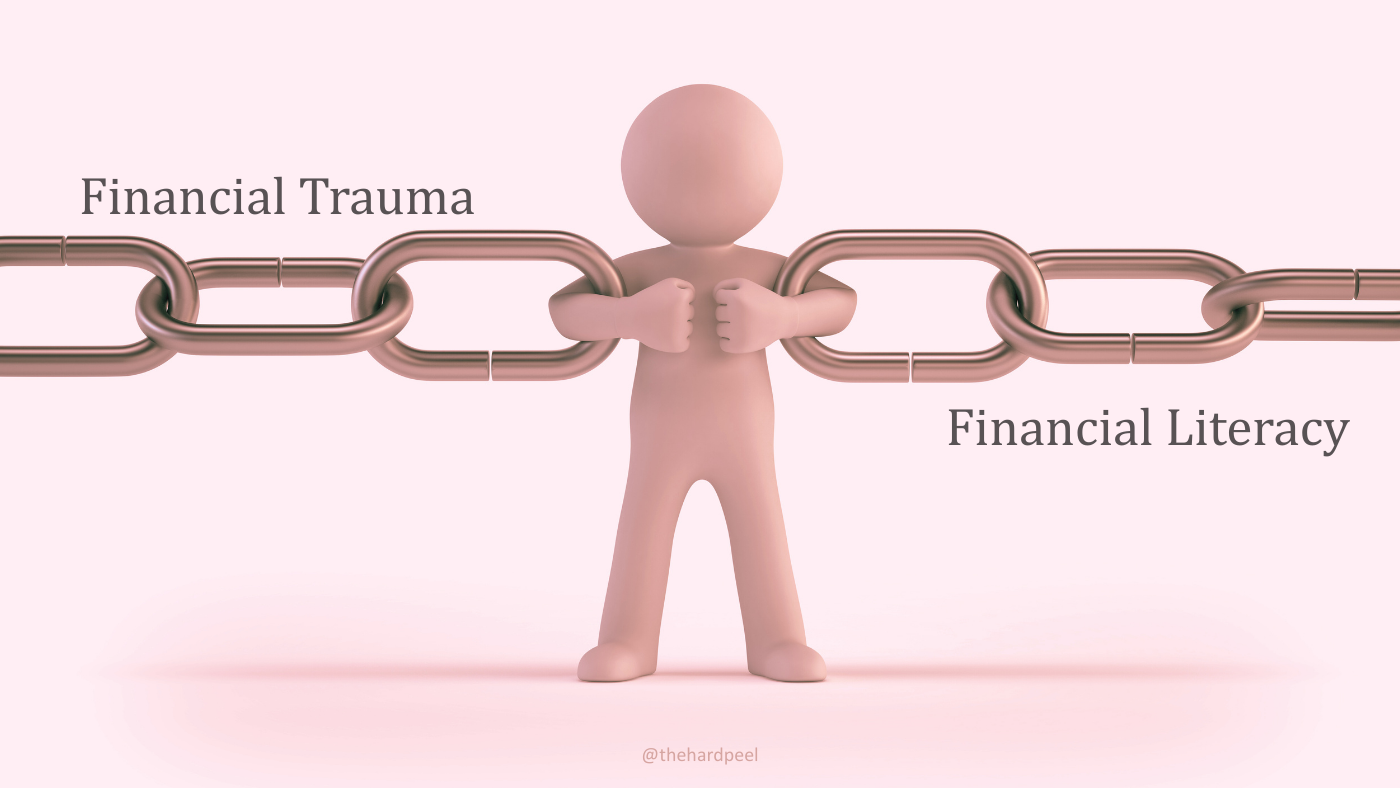
The Link Between Financial Trauma and Financial Literacy
My early budgeting skills weren’t born from empowerment, they were born from necessity. And like many of us who grew up in survival mode, my financial literacy was shaped more by chaos than clarity.
Before we ever learn to budget, save, or invest, we absorb financial behaviors from the people around us. Think about how your parents or caretakers managed money. Was it a major stressor? Were you expected to contribute to the household as a child? Did you grow up in poverty, with debt collectors knocking and bills going unpaid?
These experiences don’t just shape how we feel, they shape how we spend. Adverse Childhood Experiences (ACEs)—like neglect, abuse, and household dysfunction—don’t just affect emotional development. They shape how we approach money, risk, and long-term planning.
ACEs Leave Us At Higher Risk
Studies show that individuals with high ACE scores are significantly more likely to experience financial instability, regardless of income level [1][2]. For many, the challenges of financial trauma begin in childhood with patterns like:
- Financial abuse: You earn money, but it’s never really yours. Your autonomy is erased before it even begins.
- Scarcity: You learn to stretch everything—food, clothes, medications. Budgeting becomes a game of survival, not strategy.
- Domestic violence: Money becomes a weapon. Arguments erupt over spending and you learn to fear financial conversations.
- Shame: You internalize the idea that poverty equals failure. Even as an adult, you feel guilty for needing help.

Guilt-Driven Spending
Guilt-driven spending is one of the most confusing loops to untangle. It often looks generous on the outside—over-gifting, over-tipping, over-buying for others—but underneath, it’s a nervous system trying to earn safety.
We spend to soothe, to apologize, to prove we’re good, worthy, or not a burden. Sometimes we spend because we feel guilty for having anything at all. For me, guilt shows up as tipping 50-100% to be a “good customer,” feeling bad for saying no, or trying to “make up” for emotional absence with material presence.
When guilt is driving, long-term planning feels impossible. The future becomes a blurry threat instead of a grounded possibility. We avoid budgeting because it feels like punishment. We resist saving because we don’t believe we’ll be around to enjoy it. We sabotage stability because chaos feels more familiar than calm.

A Gentle Reminder
Avoidance isn’t laziness, it’s protection. And guilt isn’t morality, it’s an echo of the trauma we experienced.
When we begin to understand our financial behaviors as emotional survival strategies, we stop shaming ourselves and start reclaiming choice. We start asking:
- What am I trying to feel by spending this?
- What am I afraid will happen if I plan ahead?
- What does safety with money actually look like for me?
This is where healing begins, not with perfect budgets and spreadsheets, but with honest reflection. Before we learn new financial skills, we have to unlearn the ones trauma taught us. If you’re ready to dive deeper, check out my article, Financial Abuse: Rebuilding Your Finances After Abusive Relationships .
As always,
Be gentle. Go slow. Peel better.
Sources